Tech Startups: Nurturing Talent with HR
Most founders don't think about HR until something goes sideways. The first hire was a college friend, the second came from a Slack community, and by hire number nine somebody asks where the Employee Handbook is and everyone suddenly finds their shoes very interesting.
In a startup everybody has to wear multiple hats, and HR is the hat nobody wants. But, your success depends on whether you can attract, develop and keep great people, so let's walk through HR for startups, from when you need it to what to set up first and who should own it.
When Does a Startup Need HR?
A startup needs HR the day it hires its first employee, because that's when the legal paperwork starts. You don't need a human resources department on day one, but you do need someone who owns the basics.
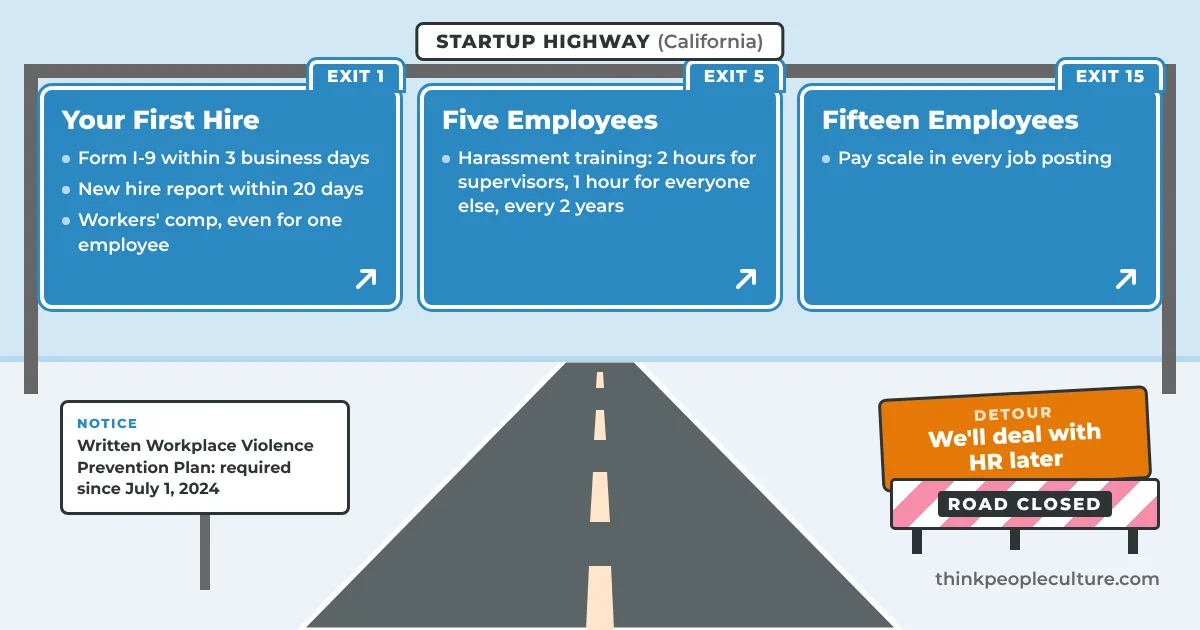
Section 2 of the federal Form I-9 has to be completed within 3 business days of a new employee's first day of work. In California, you report every new hire to the EDD within 20 calendar days, and you need workers' compensation insurance even if you have only one employee.
Then the headcount milestones pile up. At 5 employees, California requires sexual harassment prevention training, two hours for supervisors and one hour for everyone else, every two years. At 15 employees, you must include the pay scale in every job posting. And, since July 1, 2024, covered California employers have needed a written Workplace Violence Prevention Plan, which we break down in our California workplace violence prevention guide.
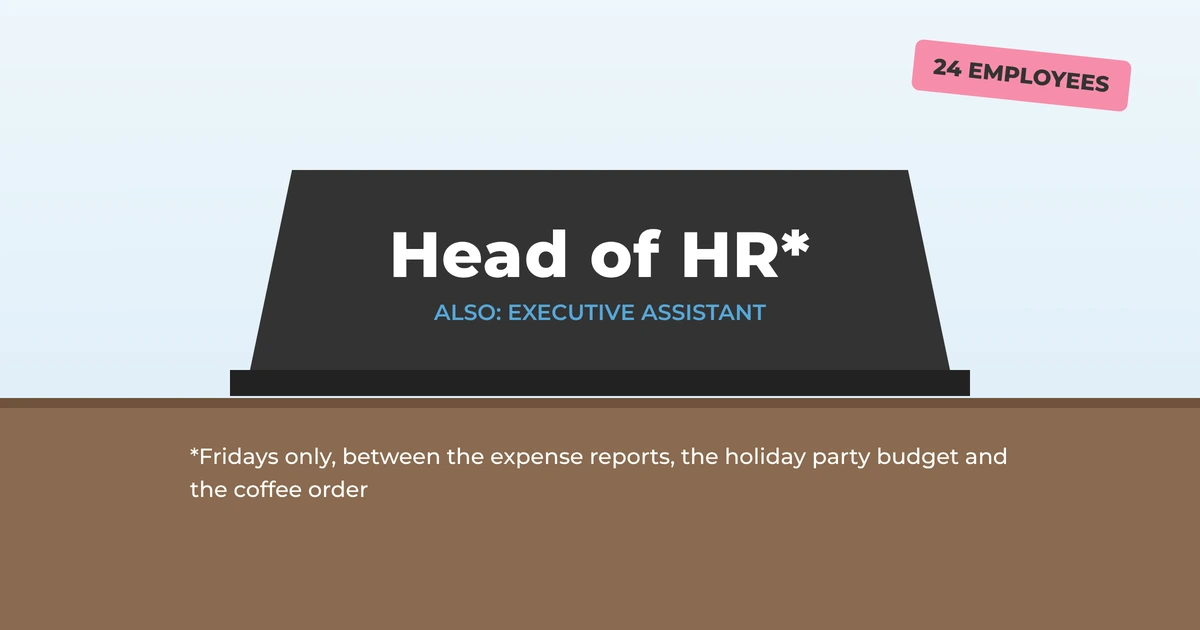
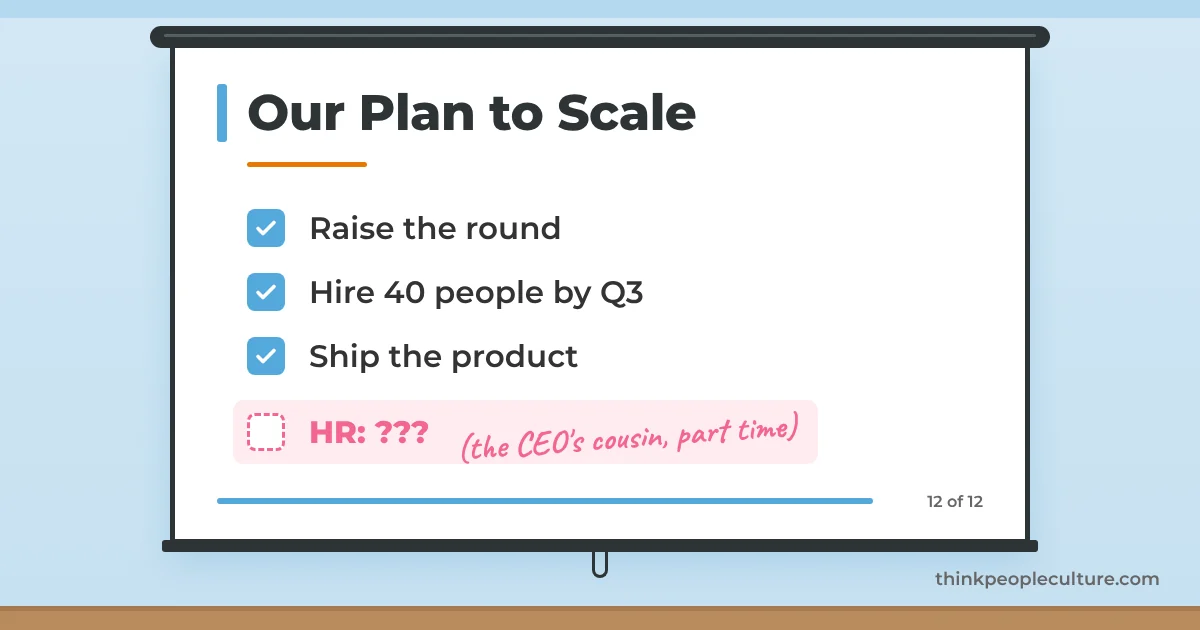
So, you already need HR, and the real question is who owns it. In my experience, the founder doing it alone stops working somewhere past a dozen people. Until then, HR is a folder on the founder's desktop called "stuff," and everyone hopes the founder never gets a new laptop.
The Takeaway: HR starts with your first paycheck, so decide who owns it before your headcount decides for you.
The HR Checklist for Startups: What to Set Up First
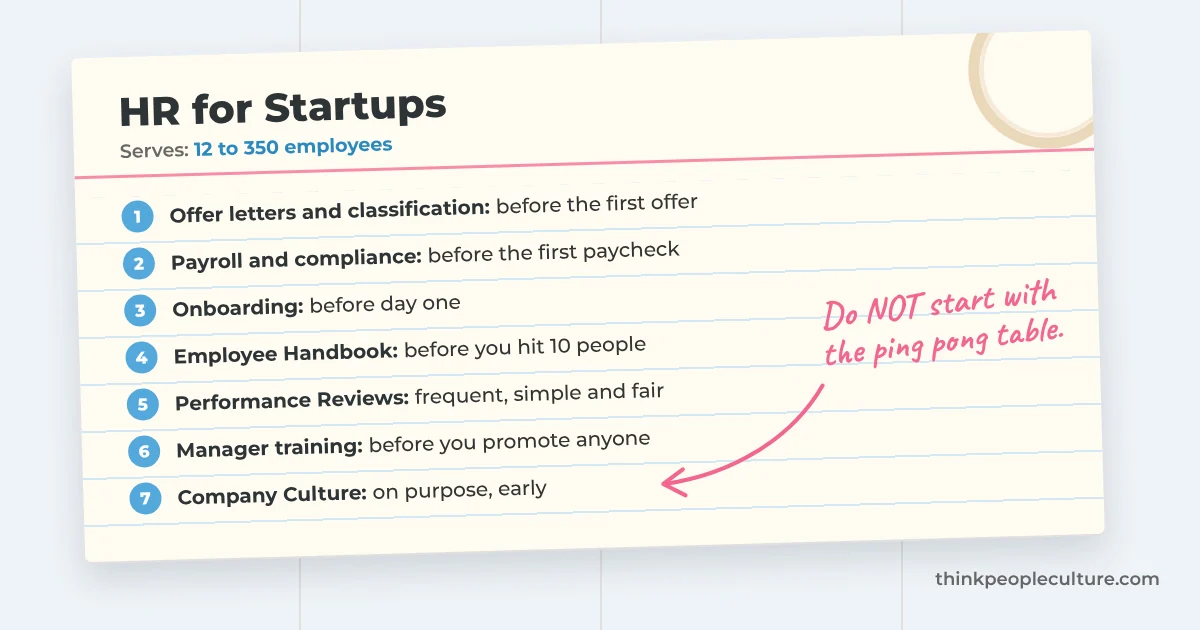
Set up HR in this order: offer letters and classification, payroll and compliance, Onboarding, an Employee Handbook, Performance Reviews, manager training and Company Culture on purpose. The first two keep you legal, and the rest help you keep your people.
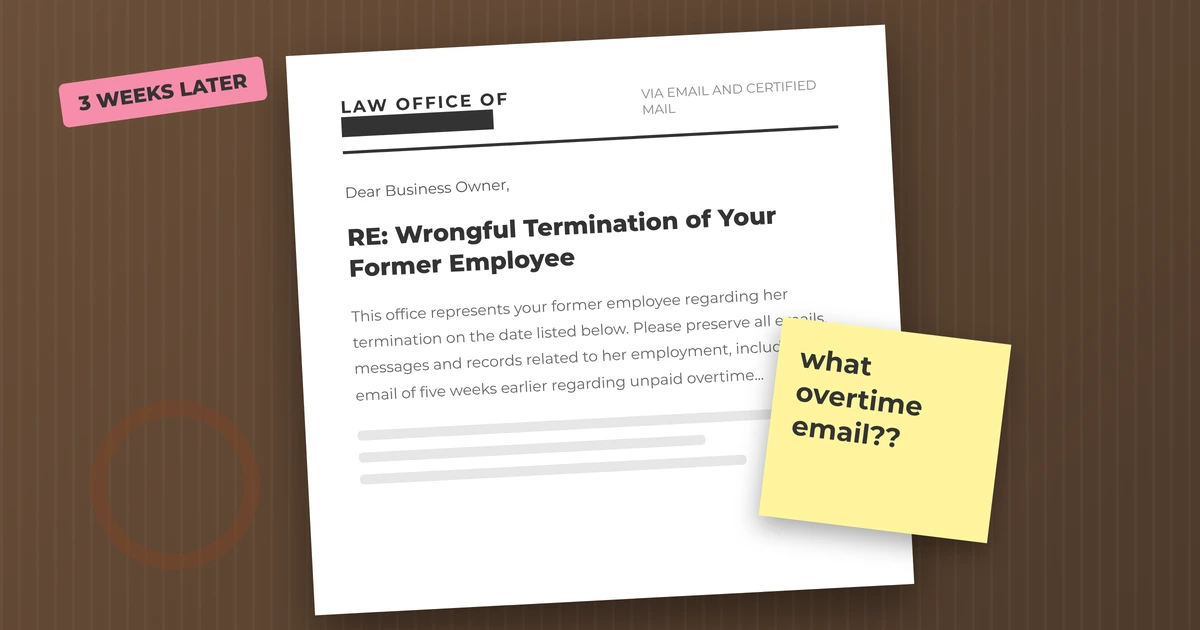
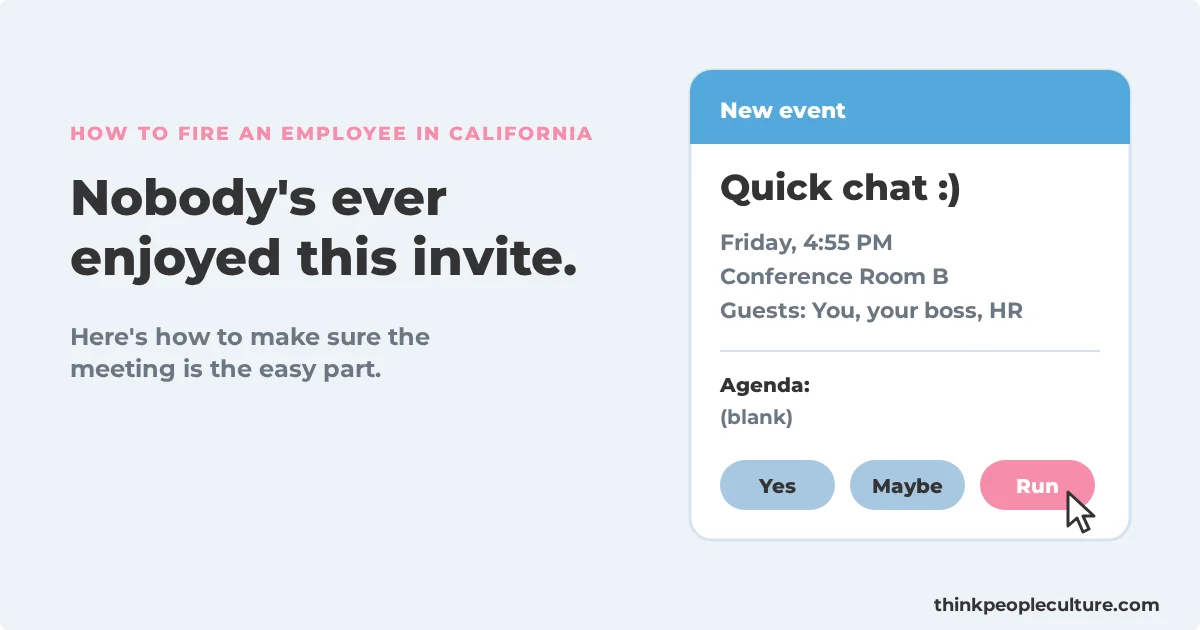
"You'll figure it out" was the entire onboarding plan when a 12 person startup hired a recent grad as its "operations person" and handed them HR, payroll questions, the office snacks and the holiday party. Nobody trained them, the goals changed every sprint and none of it was written down. Then the founder announced unlimited PTO in a team meeting, plus a new rule that every day off had to be approved by him, personally, in the group chat. Two engineers gave notice that same month, and the operations person got let go through a calendar invite titled "quick sync." Nobody had written down what good looked like, and nobody with any HR sense was in the room.
1. Offer Letters and Worker Classification
Do this before the first offer goes out. A clear offer letter and a short Job Description spell out the title, pay and whether the role is Exempt or Nonexempt, so nobody remembers the deal differently six months later.
Classification is where startups get burned. In California, a worker is considered an employee and not an independent contractor unless you pass all three parts of the ABC test, so that "1099 contractor" engineer may cost you more than you saved. My post on when to fix pay and job classification has the details.
2. Payroll and Compliance
Do this before the first paycheck. Pick a payroll service that files your taxes and tracks time off, because California employees get Paid Sick Leave of at least five days or 40 hours a year, whichever is more.
Then build a compliance calendar with your I-9s, new hire reports, workers' comp and training dates, with a name next to each one. Labor laws change every year, so when something feels like a legal call, talk to your attorney.
3. Onboarding
Do this before the new hire's first day. Gallup found that only 12% of U.S. employees say their company does a good job of Onboarding, so a decent Onboarding process already puts you ahead of most companies.
Send the paperwork early, have the laptop ready, assign a buddy and set clear 30, 60 and 90 day goals. "Here's your laptop, good luck" is a dare, and new hires can tell.
4. An Employee Handbook
Do this before you hit 10 people. An Employee Handbook puts your HR policies in one place, like pay, time off, conduct and how someone raises a problem without cornering the founder in the kitchen. A generic internet template usually misses California's rules, so start with my guide to creating an Employee Handbook.
The Takeaway: Get the paperwork, the paychecks, the first day and the handbook right, in that order, and the rest of HR gets easier.
Performance and Feedback
Startups need regular feedback more than a once a year Performance Review, because traditional annual reviews can't keep up when your goals change every quarter. Instead, set up:
- Weekly or biweekly one on one coaching conversations
- Feedback in the moment, instead of saving it all for review season
- Clear goals everyone can see, using a framework like OKRs
- Recognition that celebrates both results and effort
Performance Management can be a shared doc and a calendar reminder, as long as it's the same for everyone.
The Takeaway: Frequent, simple and fair beats one big annual review that everyone dreads.
Development and Growth Start With Your Managers
The fastest way to grow your people is to train the managers they report to. Gallup estimates that managers account for at least 70% of variance in Employee Engagement scores across business units.
As I ask in Don't Suck at Culture, "Think about the best coach or teacher you've ever had." Most startup managers got the job for being great engineers or sellers, and nobody showed them how to lead. My post on manager training for new leaders covers where to start.
Tech people value learning, so build Training and Development in early with a learning budget and time to use it, mentoring, cross team projects and career paths that don't force your best engineer into management just to get a raise.
The Takeaway: Train your managers before you promote them, because they're the ones your people actually work for.
Beyond Ping Pong Tables: Building Company Culture on Purpose
Company Culture is the set of habits that decide how work gets done when the founder isn't in the room, and you either shape it on purpose or it shapes itself. In Don't Suck at Culture, I put it this way: "Creating belonging isn't about ping pong tables or casual Fridays."
Today's talent wants meaningful work where they can see their impact, room to grow, an inclusive Workplace Culture where different perspectives are valued, flexibility that respects their life outside work and pay that recognizes what they bring.
Write down how you make decisions and handle mistakes, then make sure leaders act that way on a random Tuesday. I go deeper in how company culture shapes daily work.
The Takeaway: Design your culture early, before 40 people design it for you.
Strategic Talent Acquisition
Hiring your first 10 to 20 people sets your culture more than any values poster, and since most startups can't outspend big tech on salary, you win by being clear, fast and human.
- Employer Branding: Say what you're building, why it matters and what the job really looks like, then tell real stories from your team instead of posting a stock photo of strangers high fiving.
- Diverse Talent Pipelines: Build relationships with coding bootcamps, universities, professional associations and communities underrepresented in tech.
- Skills Based Hiring and Culture Add: Test for the skills the job needs, then ask what each candidate adds that your team is missing, because Culture Fit just gets you more people who think like you.
If hiring is eating the founder's whole week, recruitment process outsourcing can run it for you, and my book Don't Suck at Recruiting shows you how to do it yourself.
The Takeaway: Hire for skills and Culture Add, move fast and treat every candidate like a future customer.
Retention Strategies
Employee Retention comes down to fair pay, sane workloads and actually listening, because in a 20 person company every resignation lands like a small earthquake.
- Competitive Compensation: Benchmark your total rewards, including Employee Benefits, at least once a year. Equity only works as a reason to stay if people understand what it's worth and how it vests.
- Wellbeing Initiatives: Startup hours burn out your best people first, so support mental, physical and financial health, and my post on high performer burnout covers the warning signs.
- Listening Mechanisms: Pulse Surveys, Stay Interviews and Employee Resource Groups tell you what matters before it shows up as a two week notice, because employee turnover rarely surprises the people who were paying attention.
The Takeaway: Pay fairly, protect your best people's time and ask what's wrong before they tell you on the way out.
What HR Can Wait at an Early Stage Startup?
A lot of HR can wait, as long as the legal basics are covered. A full HRIS with every add on, an applicant tracking system (ATS), formal pay bands for every role and engagement software can all wait until the pain is real. Nobody at a 15 person company needs an HR system with more dashboards than employees.
The Takeaway: Buy tools when the pain is real, but never push back anything with a legal deadline or anything that touches how people get paid.
Scaling HR With Your Growth: DIY, PEO, Outsourced HR or a Full Time Hire
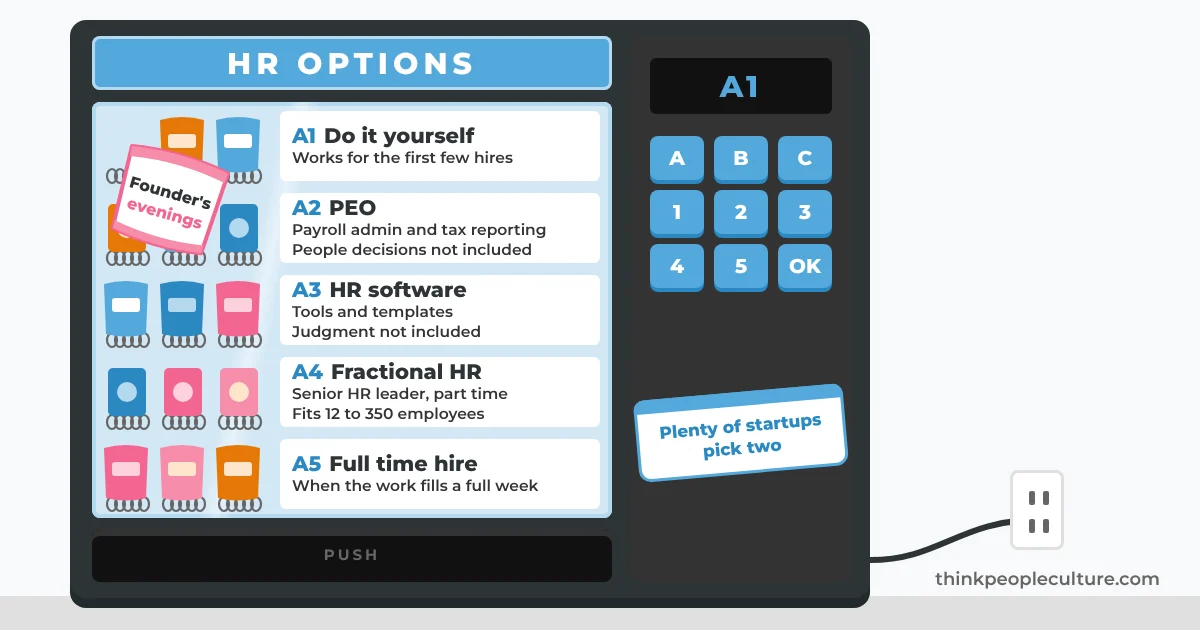
You have five ways to handle HR as you scale: do it yourself, use a PEO, buy an HR subscription, bring in fractional HR or hire someone full time. Plenty of startups mix two, like a PEO for payroll plus a senior HR partner for strategy.
- Doing it yourself: Works for the first few hires, until HR starts eating your evenings.
- A PEO: PEOs handle payroll administration and tax reporting for their clients, but you still own the people decisions, the managers and the culture.
- An HR subscription or HR software: Gives you tools and templates, but software can't tell a founder that their favorite manager is the problem.
- Fractional HR: A senior HR consultant who gives you HR support part time and owns the build, which is why fractional HR leadership fits startups and small businesses with 12 to 350 employees so well.
- A full time hire: Makes sense once the work fills a full week, because a junior generalist hired too early ends up drowning with nobody to learn from.
Whichever you pick, document your core HR processes without losing your speed, choose HR software that can scale, build an HR team with different strengths and keep investing in your managers. That's the work we do in our Fractional HR Leadership and HR Strategy services, with California compliance built in. Bay Area founders can start with fractional HR in San Francisco.
The Takeaway: Pick the option that matches the work you have now, and switch when the work changes.
Frequently Asked Questions
Does a startup need HR?
Yes, from the first hire, because that's when payroll, I-9s and workers' comp start. You don't need an HR department yet, just someone who owns the basics.
What does a startup need for HR?
Start with offer letters and correct classification, payroll and compliance, an Onboarding plan and an Employee Handbook. Then add Performance Reviews, manager training and Company Culture on purpose.
How do I start an HR plan for a startup?
List your legal deadlines now and the ones that kick in at 5 and 15 employees in California. Then put the basics in order and give each one an owner and a date.
Should a startup outsource HR?
Often, yes, because a PEO can handle payroll, and a fractional HR leader can own strategy, managers and culture until the work fills a full time role.
What's the best HR software for startups?
The one your team will actually use. Early on, a solid payroll service is enough, and you can add an HRIS or an ATS once spreadsheets get painful.
Is it true that 90% of startups fail?
Not according to the Bureau of Labor Statistics. Of new private sector business locations that opened in the year ending March 2019, 51.5% were still open five years later.
Let's Build Your HR Foundation Before You Need It
If you read this and thought of a missing I-9, a "contractor" who works like an employee or a manager nobody trained, that's your starting point. Book a call and we'll map out the HR basics your startup needs next, in the right order.
Hire Better. Lead Smarter. Don't Suck!
HR Help in Your Inbox
My free newsletter for owners with no HR person, with plain answers sent when there's something worth reading.
We respect your privacy. Unsubscribe at any time.