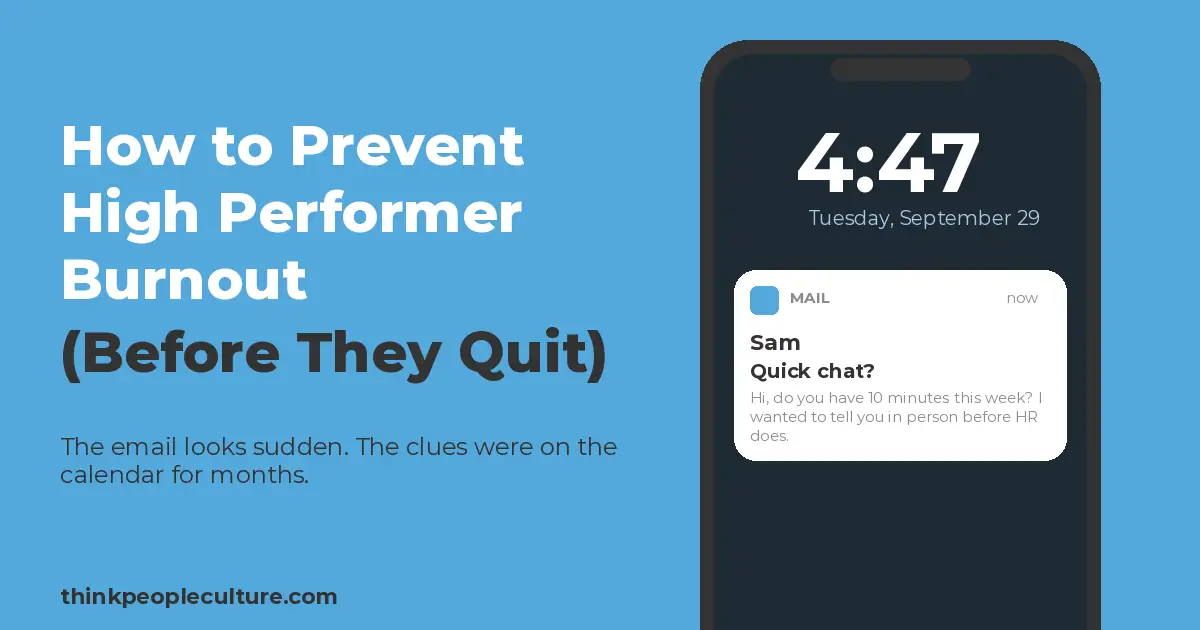
How to Prevent High Performer Burnout (Before They Quit)
High Performer Burnout Is a Leadership Warning
When your best person quits after a stretch of preventable burnout, you didn't lose a seat on the org chart. You lost the knowledge, the momentum, the relationships, and the example everyone else was watching. The resignation looks sudden from where you're sitting, but high performer burnout leaves clues for months before anyone hands in notice. You just weren't reading them.
Self care is fine. Take the walk, book the vacation, buy the candle. But no amount of self care fixes a work system built on chronic overload, priorities that change every Tuesday, weak management, and a permanent state of urgency. Telling someone to manage their stress better while you drop one more "quick" request on their desk isn't a retention strategy, it's a way to keep the problem alive while feeling good about yourself.
Most leaders take embarrassingly long to notice the pattern. Every time your best person delivers, your instinct is to hand them the next big messy project because you trust them with it, and the average performers get the routine stuff and coast. From where your best person sits, that isn't trust. It's being punished for being good at their job.
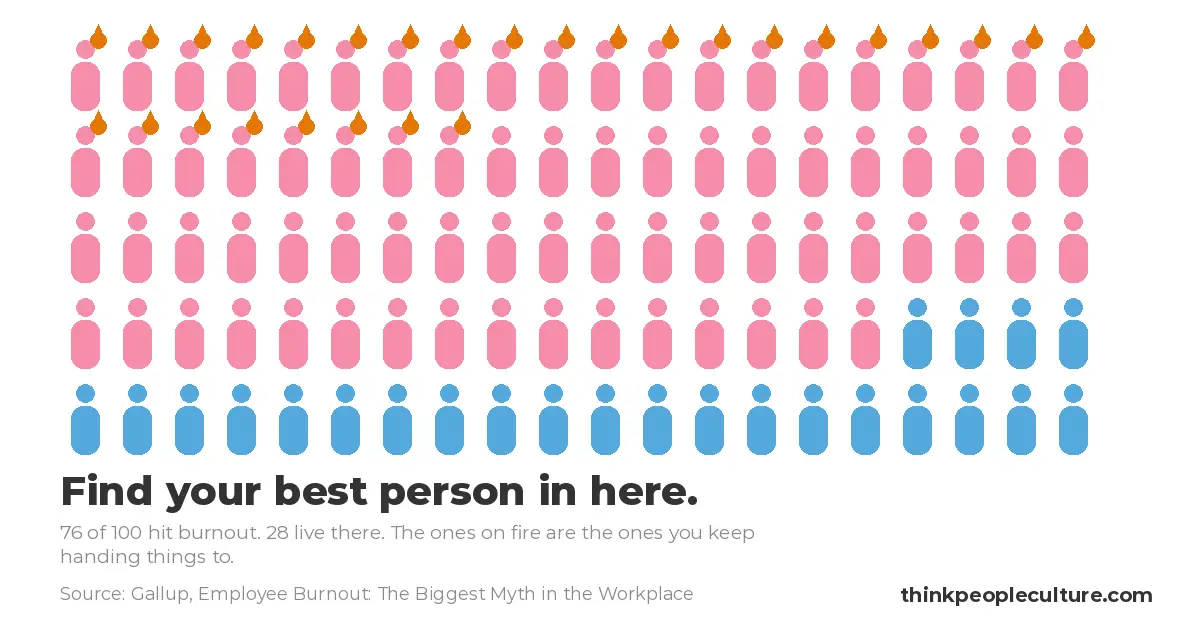
And this isn't a fringe problem. Gallup found that 76% of employees hit burnout at least sometimes and 28% say they're burned out very often or always. The people at the top of that list are usually your strongest, because they're the ones you keep handing things to.
So, the job for leaders is to look at the conditions around the employee: workload, priorities, decision rights, recognition, management support, and room to grow. This article walks through six practical areas. You'll learn how to spot the changes in behavior and performance, name the workplace causes, talk about burnout without blame, make changes that actually help, stop the pattern from repeating at the leadership level, where it actually gets decided, and run a simple checklist that catches risk early.
The goal is sustainable performance. It's not squeezing one more heroic quarter out of your strongest people and hoping they don't notice.
What High Performer Burnout Looks Like
High performer burnout almost never shows up as a dramatic announcement. Nobody flips a table. It shows up as a pattern of small changes that leaders wave off because, look, the work is still getting done.
Watch for the drop in energy, enthusiasm, or patience. The person who used to bring three ideas to every meeting goes quiet, pulls back, or gets unusually cynical. Communication shifts too. Replies get shorter, updates land late, and routine conversations feel heavier than they should.
Quality slips in ways that are easy to excuse. Missed details, slower decisions, work that's merely fine from someone who used to make it excellent. They stop asking the thoughtful questions because every ounce of energy is going into the pile already on their desk.
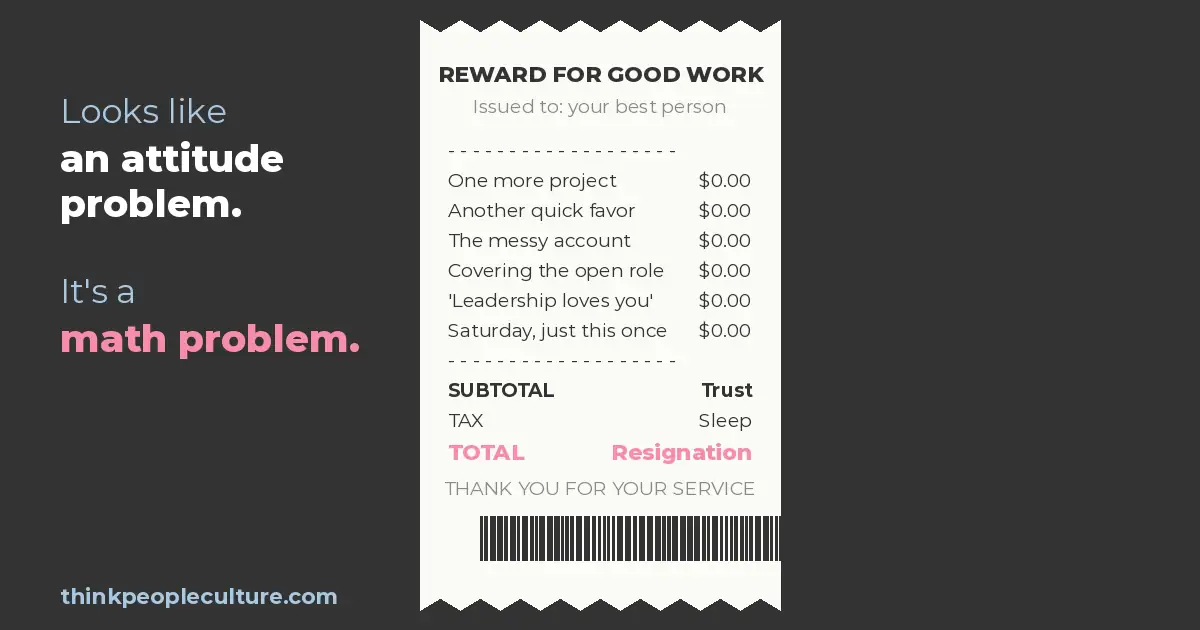
Then there's the change in willingness. The high performer who volunteered for every important project starts saying no, dodging visibility, setting boundaries that feel out of character. From your chair that looks like disengagement. From their chair it's a completely rational response to sustained overload. They're not checking out, they're rationing. Being good at what they do has landed them in unrealistic deadline hell because everyone knows they can be relied on. That's not an attitude problem, that's a math problem.
None of these signs proves burnout on its own, and you're not there to diagnose anyone. Your job is to notice the change. When a strong employee starts behaving differently, treat it as a leadership signal and start asking what changed around them, not what's wrong with them.
The Workplace Conditions That Create Burnout
Burnout doesn't come from one hard week. It grows in a workplace where excessive effort feels normal and recovery feels optional.
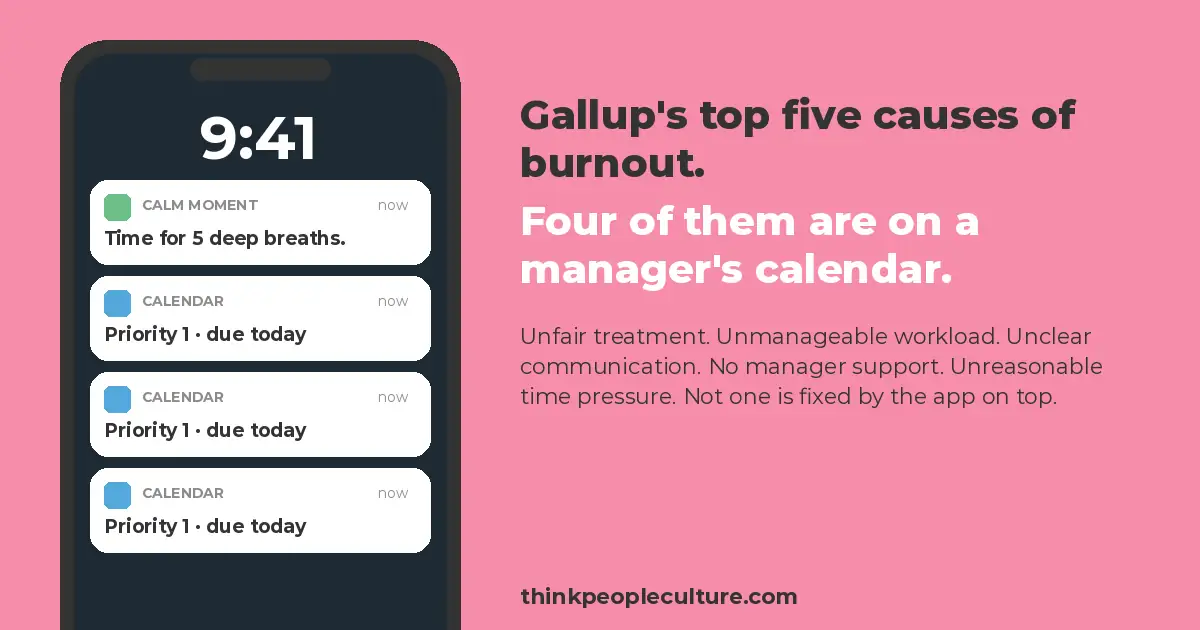
Gallup's top five causes of burnout are unfair treatment, unmanageable workload, unclear communication from managers, lack of manager support, and unreasonable time pressure. Read that list again. Four of the five are things a manager controls. Not one of them is fixed by a meditation app.
Chronic overload is where it usually starts. A high performer absorbs the unfinished work, the urgent requests, and the responsibilities nobody else has room for. If the team's understaffed, that temporary stretch becomes the operating model, and eventually even your most talented person runs out of room.
Unclear priorities pour gas on it. When every project is labeled urgent, nobody can tell what deserves their best attention, so they either work longer hours or risk disappointing someone. Neither option produces sustainable performance, it just produces tired people who are good at looking busy.
Weak management adds a whole other layer. A manager who won't set boundaries, make decisions, clear obstacles, or notice a workload problem leaves the employee to solve organizational issues alone. And when constant urgency becomes the culture, interruptions and last minute requests start getting treated as proof of commitment.
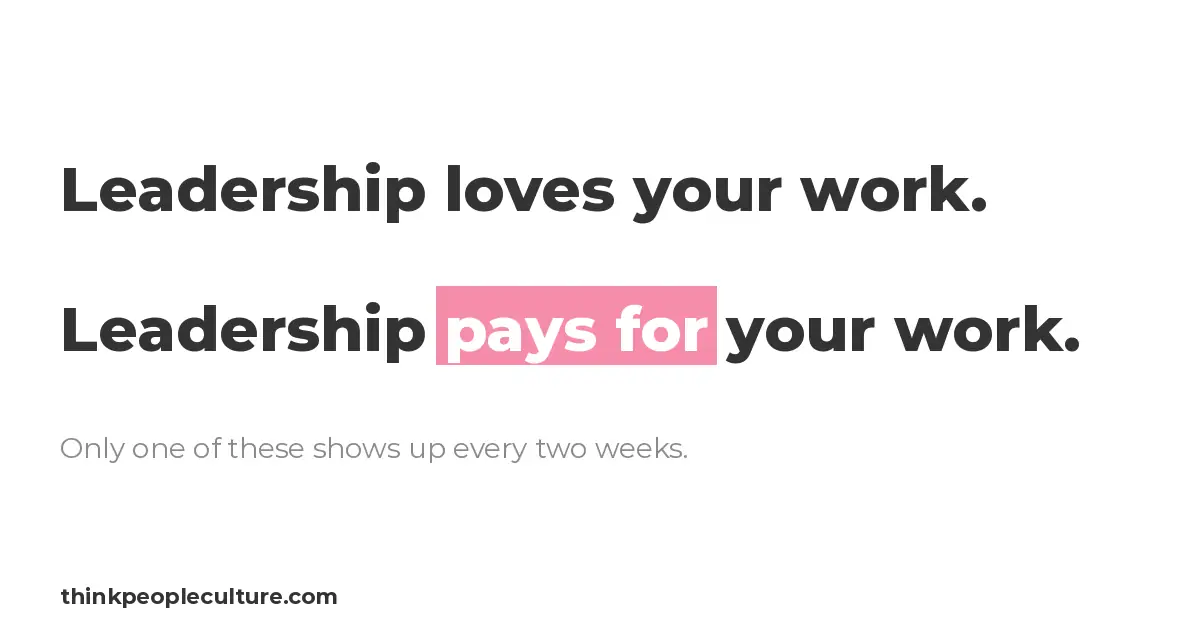
Then the organization rewards the overwork, which is how burnout gets baked in. The person who always says yes gets praise, visibility, and more work, while the person who sets a thoughtful boundary gets overlooked. That teaches your high performers a damaging lesson: the fastest route to recognition is to become permanently available. The reward for great work is more work and a corporate pat on the back. "Leadership loves your work" is not a compensation plan. The only recognition most people actually need shows up every two weeks, so put it in there.
How Managers Should Talk About Burnout
When you notice the signs, don't diagnose the person and don't launch into a speech about self care. Have a private, calm conversation about what you've actually seen.
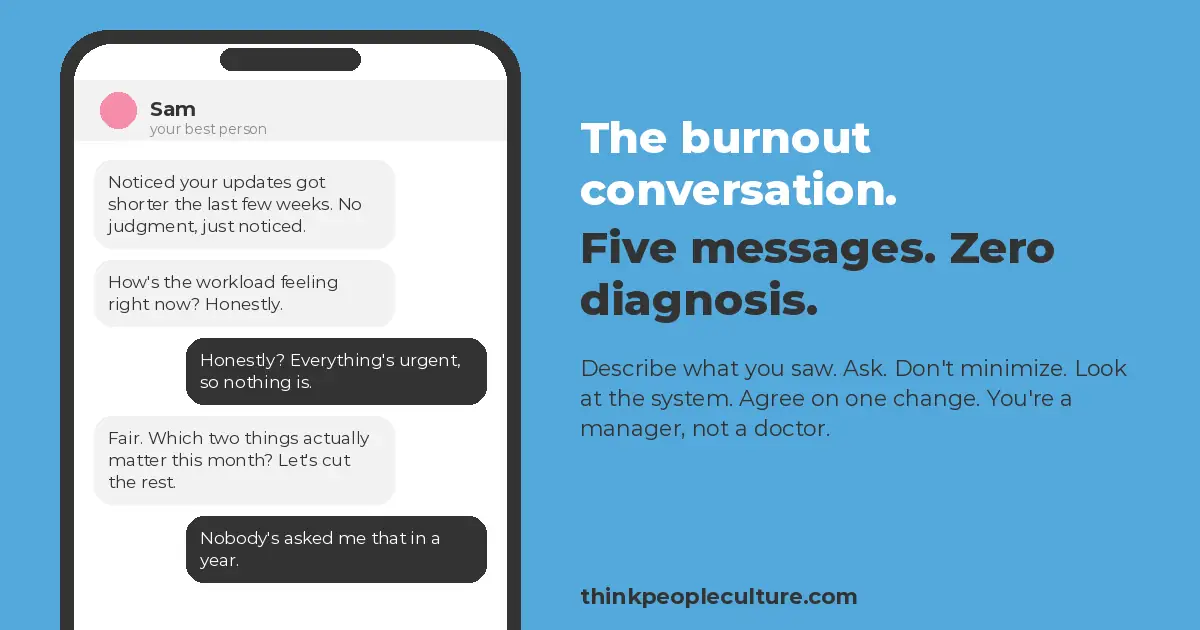
Describe the change without judgment. Say you've noticed shorter updates, missed details, lower energy, or less appetite for extra work. Stick to what you observed, not a label like "burned out." You're a manager, not a doctor.
Ask open questions. Try "How's your workload feeling right now?" or "What's changed for you lately?" Then listen, and don't spend the silence building your rebuttal. You're there to understand the conditions, not win a case.
Don't minimize the answer. Skip "Everyone's busy" and "You just need a better system." Those lines make the employee responsible for a problem the organization probably created. And while we're here, when a strong performer starts pushing back on deadlines and process, have you considered that the deadlines and the process might actually have issues? The overachiever is the one person who knows the work well enough to tell you the deadline is nuts. Your best people are your early warning system. Treat the alarm like an alarm, not like a personality.
Explore the work system. Ask about competing priorities, staffing, unclear decisions, interruptions, manager support, recognition, and growth. The pressure points are usually right there, and they've been there a while.
Agree on immediate changes. End with specific next steps: remove a deadline, shift some work, clarify the priorities, or block recovery time. Follow up soon, and keep your word. A promise you don't keep is worse than no conversation at all.
That conversation should land two things clearly. The employee matters, and the system around them is open to change.
Practical Changes That Reduce Burnout
Once you know the pressure points, change the work. Don't just coach the person to cope better with work that shouldn't exist in that shape. Useful moves include:
Reduce the load. Cut lower value work, shift responsibilities, delay nonessential projects, or bring in temporary support. Don't call everything a priority, hand over ten competing priorities, and leave the employee to sort it out alone.
Clarify priorities. Name the two or three outcomes that matter most, say out loud what can wait, and revisit the list every time a new request shows up.
Give people decision rights. Spell out which decisions the employee can make without asking. Waiting for permission all day is its own kind of pressure, and it slows everything down.
Provide practical support. Clear obstacles, fix staffing, protect focus time, and make sure the manager is actually reachable when a decision's needed.
Build in recovery time. After an intense project, lighten the next stretch, protect time away, and stop treating nonstop availability as commitment.
Recognize sustainable performance. Praise sound judgment, collaboration, quality, and healthy boundaries, not just the late nights and the heroic saves. And if the praise never turns into pay or a title, expect the rational response: they start doing average work for the same pay with less stress, and from their side of the desk that's problem solved. If you want the details on doing this well, recognition is one of the biggest retention levers you have.
Reset expectations. Agree on realistic deadlines, output, and availability. If the plan only works with constant overtime, the plan is the problem.
Write the changes down and put a follow up on the calendar. A temporary adjustment tells you fast whether this is manageable or whether the team needs a more lasting investment.
How Leaders Stop Burnout From Coming Back (And Where HR Actually Fits)
Individual fixes won't hold if the organization keeps manufacturing the same pressure. And let's be clear about who owns that. HR doesn't set the budget, approve the headcount, or decide what lands on your best person's desk on a Tuesday. Leaders do. HR can see the pattern and say it out loud, but leaders have to ask whether staffing, planning, and performance expectations actually match the work the business needs done, and then act on the answer.
Start with workforce planning. Look at workload, staffing levels, open roles, recurring overtime, and how much responsibility is piled on a few dependable people. If one high performer keeps absorbing the gaps, the real answer is a hiring plan, a redesigned role, or an honest decision about what the team will stop doing. Those are leadership decisions, and no amount of HR memos makes them for you. And for the record, a high performing individual contributor is usually a lot harder to replace than a manager. Remember that next time the budget conversation comes up.
Managers need practical training, not a poster. Teach them to set priorities, talk about workload, give feedback that's useful, protect focus time, and recognize the warning signs. Gallup estimates managers account for at least 70% of the variance in employee engagement. A manager who sees the exhaustion but has no authority or skill to change the work is just a concerned bystander with a calendar.
Accountability matters here. Track whether leaders follow through on workload changes, staffing commitments, development plans, and recovery time. Don't reward managers for short term output while ignoring the people cost sitting underneath it.
And make sustainable performance a leadership expectation, on paper and in practice. Recognize quality, sound judgment, collaboration, and consistent results, not constant availability. A raise alone won't do it either. You can't fix frustration with money. Give a burned out high performer a raise without fixing the other stuff and they leave faster, because now they have proof of what they're worth to somebody else. When executives model realistic boundaries and push back on repeated urgency, employees learn that strong performance doesn't require sacrificing their health to prove they care.
The catch is that leaders can't see most of this from inside their own calendar. That's what a real HR partner is for, someone who can read the workload across teams, tell you which manager is burning people out, and hand you the plan before the resignation letter shows up. If your internal HR has that seat at the table, use it. If they're buried in paperwork, or you don't have HR at all, that's exactly the gap a fractional HR leader fills. Senior enough to look at the whole system and name what's broken, without the full time salary of an HR executive you don't need yet.
A Leadership Checklist for Catching Risk Early
Run this checklist on a regular rhythm, not only when a valued employee starts eyeing the exit. Burnout is a lot easier to fix while the warning signs are still small.
Notice the change. Lower energy, shorter communication, missed details, less creativity, or less willingness to take on additional work.
Ask before assuming. Have the private conversation about what you observed and ask how the workload, priorities, support, and pace feel right now.
Check the system. Review staffing, competing deadlines, interruptions, decision delays, unclear ownership, and the pressure to stay constantly available.
Remove work. Stop or delay lower value tasks, shift responsibilities, and be clear about what won't get done for now.
Clarify success. Set the outcomes that matter most, realistic deadlines, decision rights, and availability expectations.
Protect recovery. Schedule time away after intense work, and don't punish healthy boundaries with less recognition or fewer opportunities.
Follow through. Revisit the changes, keep your commitments, and escalate recurring staffing or management problems instead of asking the employee to absorb them again.
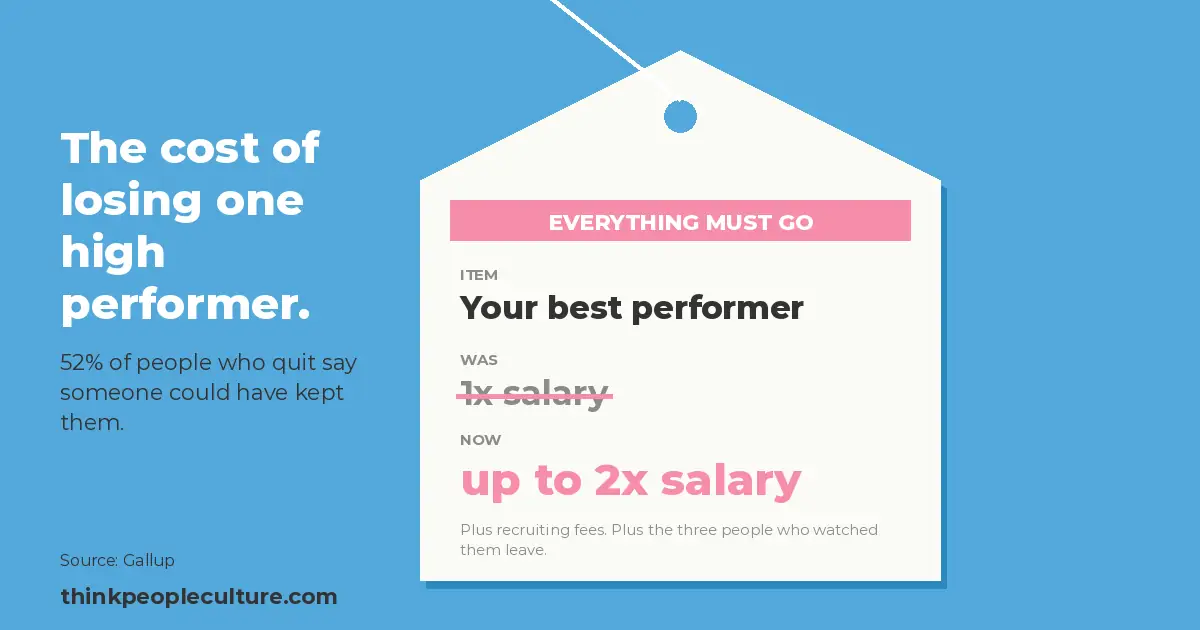
High performers rarely leave over one demanding week. They leave when leaders notice the strain over and over and change nothing. Gallup puts the cost of replacing one employee at one half to two times their annual salary, and 52% of people who quit say their manager or company could have done something to keep them. Do the math on your best person. Then do it again with the recruiting fees, which is a whole book on its own.
High performer burnout is almost always visible before it turns into a resignation. It starts with lower energy, shorter communication, missed details, or a pullback from work that used to feel meaningful. Leaders who catch that early get to ask better questions and change the conditions creating the strain.
That means cutting unnecessary work, clarifying priorities, improving support, protecting recovery time, and holding managers accountable for following through. It also means accepting that not every employee can or should be kept if the role, the expectations, or the relationship no longer works. Retention isn't keeping someone at any cost, it's making a good faith effort to build work that's realistic, supported, and worth continuing.
The leadership standard is simple. Strong performance should never require permanent overextension. If the business depends on one person working past sustainable limits, the business has a capacity problem, not a hero.
Notice the risk early, change the system around the employee, and keep your commitments. Sustainable performance is built by leadership choices made before your best person decides to leave. Leadership isn't a title. It's a Tuesday morning.
If you read this and recognized two or three of these signs on your own team, you already know which person you're worried about. Don't wait for the resignation letter to confirm it. Grab 30 minutes with me, bring the situation, and we'll figure out what's actually broken and what it would take to fix it before that person decides for you.
Get HR Insights Delivered
Join our newsletter for the latest HR trends, tips, and best practices delivered straight to your inbox.
We respect your privacy. Unsubscribe at any time.